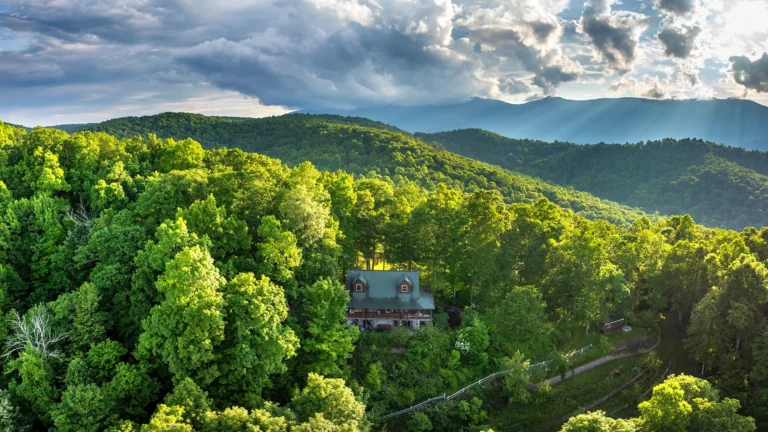
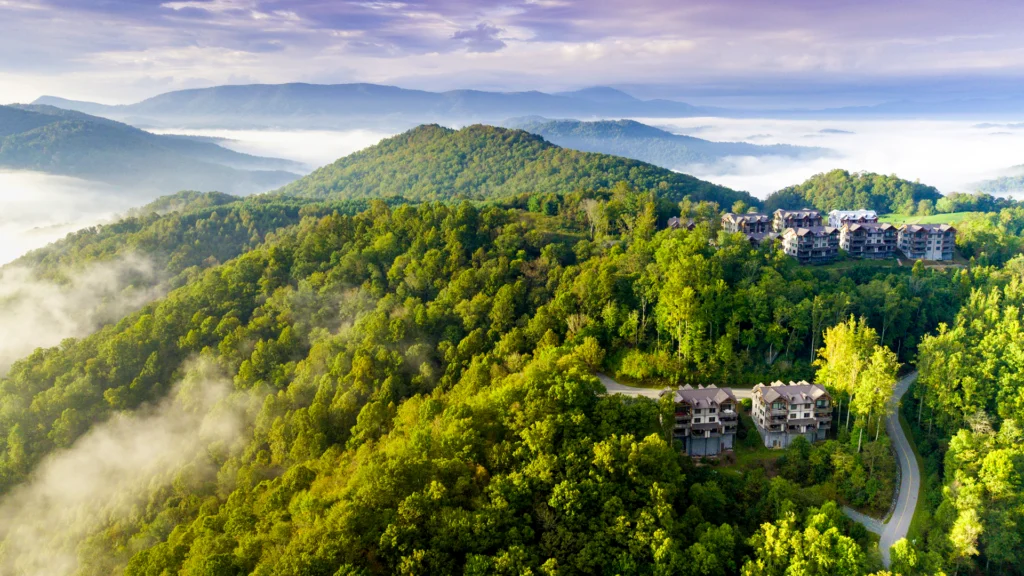
Owning a mountain home in North Carolina’s High Country means four distinct seasons, each with its own rhythm. Summers are mild, with Boone’s July highs averaging in the high 70s. Fall color typically peaks in mid-October. Winters bring real snow and three ski resorts, and spring arrives late but beautifully. The owners who enjoy it most plan their visits, and their home’s care, around all four.
Key takeaways
- Elevation sets the climate. Boone sits at 3,333 feet, and nearby peaks top 5,500.
- Summer is the High Country’s quiet advantage: cool air while the rest of the South swelters.
- Fall is peak season for color, visitors, and traffic. Plan around it.
- Winter is the season that tests a property. Buy with January in mind.
What is the High Country climate like?
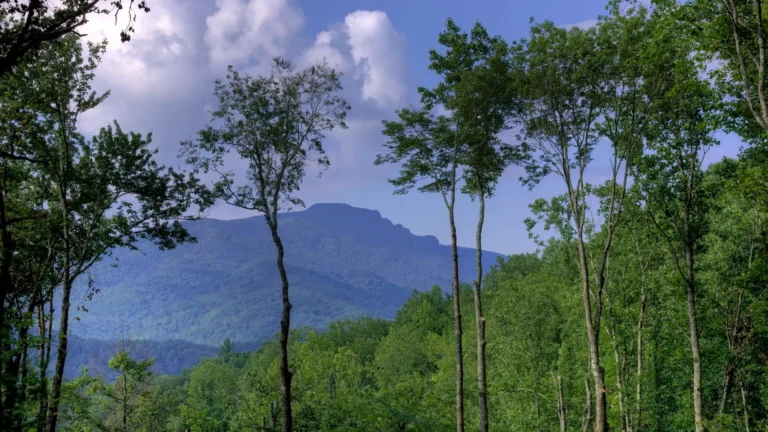
The High Country has a four-season mountain climate that’s cooler and snowier than almost anywhere else in the Southeast. Elevation does the work: towns here sit between roughly 3,000 and 5,500 feet.
Here’s what that looks like in Boone, the region’s hub:
- Elevation: 3,333 feet
- Average July high: about 78 to 79°F
- Average January low: about 22 to 23°F
- Average annual snowfall: about 25 inches
- Average annual precipitation: about 59 inches
Higher spots run colder. Beech Mountain, at 5,506 feet, is the highest town east of the Rocky Mountains, and its winters look very different from Boone’s. When you compare homes, compare elevations too.
Summer: cool air and long evenings
Summer is when many second-home owners fall for the High Country all over again. While Charlotte and Atlanta bake, mountain afternoons stay in the 70s and evenings call for a light jacket.
Summer here means:
- Hiking and fly-fishing along the Watauga River
- Golf at private clubs across the region
- The Grandfather Mountain Highland Games, one of North America’s largest Scottish gatherings
- Art in the Park in downtown Blowing Rock and Symphony by the Lake at Chetola
For owners: summer is peak season for guests and, if you rent, for bookings. It’s also when landscaping and exterior projects get done, so schedule contractors early.
Fall: color, crowds, and football Saturdays
Fall is the High Country’s showpiece. According to Appalachian State University biologist Howard Neufeld, color has historically peaked around mid-October, though timing has varied more in recent years.
October also brings the Woolly Worm Festival in Banner Elk (held the third weekend of October since 1978) and home football Saturdays at Appalachian State in Boone.
For owners: this is the busiest stretch of the year. Expect traffic on US 321 and NC 105 on weekends. Fall is also your window to prepare for winter: service the heating system, clean gutters, and line up snow removal before November.
Winter: snow, skiing, and a quieter mountain
Winter is when the High Country turns into a ski town. Three resorts sit within a short drive of each other: Appalachian Ski Mountain near Blowing Rock, Sugar Mountain, and Beech Mountain Resort near Banner Elk.
Winter is also the High Country at its most peaceful. Crowds thin, restaurants slow down, and a snowy ridge view from your own fireplace is hard to beat.
For owners: winter is the season that tests a property. Before you buy, know:
- Who plows your road, and how quickly
- Whether your driveway is steep, and which way it faces (north-facing drives hold ice)
- How the home is heated, and how it’s monitored when you’re away
- Who checks on the property after a hard freeze
Spring: late, and worth the wait
Spring comes slowly to the mountains. March can still bring late-season skiing, April warms up gradually, and by May the hillsides fill with blooms and new leaves.
For owners: spring is inspection season. Walk the property after winter, check the roof, gutters, and drainage, and restart landscaping. It’s also a smart time to tour homes, since you’ll see how they came through the cold.
| Season | What it's like | What owners plan for |
|---|---|---|
| Summer | Mild days in the 70s, festivals, golf, hiking | Guests and rentals, landscaping, exterior projects |
| Fall | Peak color in mid-October, busiest visitor season | Traffic, heating service, gutters, snow removal contracts |
| Winter | Snow, three nearby ski resorts, quiet towns | Road and driveway access, heat monitoring, freeze checks |
| Spring | Late arrival, blooms by May | Post-winter inspection, drainage, landscaping restart |
Which season should you buy for?
Buy for the season you’ll use most, but make sure the home works in winter. Most owners favor two or three seasons, and that should shape where you look.
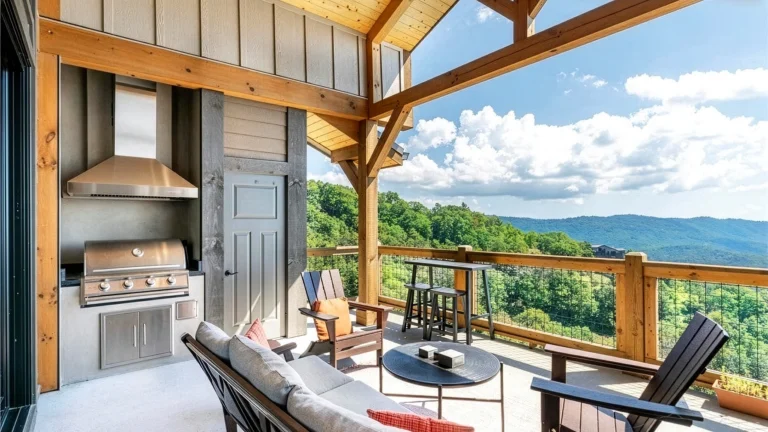
- Summer-first buyers can prioritize views, decks, and golf or club access.
- Fall-first buyers may want quick access to the Blue Ridge Parkway and town, without sitting on the busiest roads.
- Winter-first buyers should look closer to the slopes, with easy road access and reliable snow removal.
Whatever your favorite season, every High Country home has to make it through January.
The bottom line
A High Country mountain home isn’t a summer cottage or a ski chalet. It’s both, plus a front-row seat to fall and a slow, lovely spring. Choose a home that fits the season you love most, and plan its care for the one you’ll miss.
Ready to find your mountain home? Browse High Country homes for sale in Boone, Blowing Rock, Banner Elk, and beyond.
Frequently Asked Questions
How much snow does Boone, NC get?
Boone averages about 25 inches of snow per year, based on long-term climate records. Higher-elevation areas nearby, such as Beech Mountain and Sugar Mountain, typically get more. Snow usually falls between December and March, and a few storms each winter can make steep or unplowed roads difficult, which is why access matters when buying.
When is peak fall color in the High Country?
Fall color in the High Country has historically peaked around mid-October, according to Appalachian State University biologist Howard Neufeld. Higher elevations tend to turn first and lower valleys later, and timing can shift by a week or more depending on the year’s weather.
Can you use a High Country mountain home in winter?
Yes. Many owners visit specifically for skiing and quiet winter weekends. The key is a home with reliable access: a maintained road, a manageable driveway, and someone to handle snow removal. Homes on steep, north-facing, or privately maintained roads may be hard to reach after a storm.
Is the High Country busy year-round?
Not evenly. Summer and fall are the busiest seasons, with October typically the peak for visitors and traffic. Winter brings ski crowds on weekends near the resorts, while spring is the quietest time of year. Many owners love the off-season for exactly that reason.
What is the best time of year to tour homes in the High Country?
Late winter and early spring are often the most revealing, because you can see how a home and its road handle snow, ice, and runoff. Fall tours are beautiful but can hide issues under perfect weather. Ideally, visit a property you’re serious about in more than one season.